How to Decode Cravings: The 5-Question Pause Script for Women Facing Emotional Eating at 9:37 p.m.
If you’ve ever reached for a snack after a long day, only to realize you’re not hungry at all but you want that bite, you’re not alone. Emotional eating is real, especially when the clock hits late night (remember when we used to be getting ready to go out at 9:30 p.m.?!)—a moment when stress, routines, and hormones collide, turning cravings into a nightly habit.
This article gives you a simple, science-backed framework that actually works in those craving-induced moments. You'll walk away with a five-question Pause Script you can use every evening to distinguish real hunger from emotional cues, align your choices with your goals, and avoid the overwhelm of “dieting” with more complexity than it needs.
Think of it as your Reliability Ritual—quick, compassionate, and effective.
Why it matters
Most evening cravings aren’t about hunger or the need for energy. They’re about emotion, habit, or fatigue.
A five-question script reduces decision fatigue, improves adherence, and helps you stay in control without judgment or guilt.
By responding to real hunger, you protect long-term progress, energy, and confidence (not to mention digestion, skin health and good sleep hygiene).
What this IS: a tool for healthier decision making in times of discomfort.
What this ISN'T: a restriction from ever snacking again. You'll notice that nowhere in this article do I suggest denying yourself at all times. Rather, I want you to stay present and let YOU, not the craving or the habit, be the deciding factor.
Understanding the night-time hunger spectrum
Cravings that feel uncontrollable drive you to the fridge and drive you nuts. I get it: p.m. cravings make us feel out of control. But there's good news...
You aren't powerless. You can take back control!
That starts with awareness.
Physiological hunger vs emotional/habitual cravings
The first step in decoding cravings and taking back your power is understanding that there is a real difference between physiological hunger - needing energy at a cellular level - and cravings.
Real physiological hunger = a gradual, wavelike signal that grows with time since the last meal and is satisfied with nutrient-dense foods.
Emotional hunger = triggered by stress, sadness, boredom, or loneliness. Often, cravings are for texture, sugar, or specific comfort foods.
Habitual cues = routine-driven cravings (e.g., watching a show, finishing work, scrolling social media) that train the brain to “reward” with food. You can identify this kind of cue by the self-talk patterns that accompany it: "I deserve this", "I earned this".
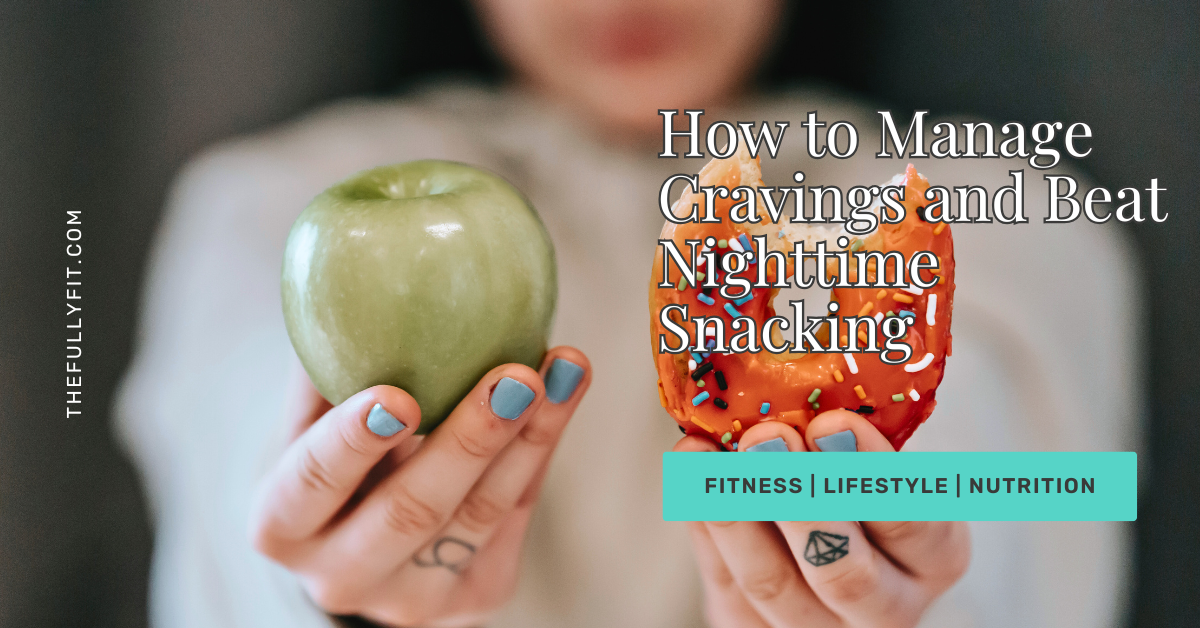
Grabbing and apple would satisfy real hunger, but probably not emotional hunger/cravings.
The goal today: build awareness first, then apply a practical, compassionate pause before making a conscious decision.
The 5-Question Pause Script (at 9:37 p.m.)
Before you read further: this script is designed to be simple, quick, and repeatable. Use it as a nightly routine, not a punishment. Answer honestly, gut-reaction quickly and without judgement.
Question 1: Am I truly hungry right now?
If yes: what would satisfy me (protein, fiber, fat, carbs) and how much?
If no: move to the next questions.

Question 2: What emotion am I feeling right now, and what need is it signaling?
Common emotions: stress, boredom, loneliness, fatigue, overwhelm.
Needs mapping: connection, rest, comfort, relief, security.
Question 3: What’s the real reason I want to eat right now?
Is it craving for taste/texture, habit, or a coping mechanism?
If it’s habit or emotion, see if you can get the need met in another way.
Question 4: Have I already eaten what I need today to support my goals?
Quick check: Did I meet my protein target, fiber intake, and total energy for the day?
If under, plan a mindful, portion-controlled option that aligns with your goals.
Question 5: What will I do in the next 30 minutes to honor my goals (without guilt)?
Options: a short walk, hydrating water or herbal tea, a quick stretch, journaling, a brief call with a friend, a 5-minute breathing exercise, or a small, mindful snack if still truly hungry.
Commit to one action and set a timer if helpful.
How to implement the Pause Script
Create a reminder: put a sticky note on the refrigerator after dinner to cue your practice.
Prepare a “go-to” toolkit: Keep a few high-protein snacks pre-portioned, or have healthy treats ready (fruit, Greek yogurt, a small handful of nuts) so that a real hunger cue can be satisfied without derailing progress.
Track your answers: Use a simple note on your phone or a dedicated app to log the five responses. Tracking builds awareness and accountability.
Review weekly: On Sundays, review patterns. Are there specific emotions or activities that drive your 9:37 p.m. cravings? Use this insight to adjust your daily routine.
Deeper psychology behind nighttime cravings
If nighttime cravings are NOT hunger, what are they? Why do they come from? Why do they happen?
That strong urge to grab a snack (often energy-dense, high-sugar, or high-fat) that arises after you've eaten dinner and cleaned up the kitchen. It's annoying, right? That compulsion for a specific crunch or flavor. It feels emotionally charged - which makes it a particularly sensitive subject.
The core drivers of nighttime cravings
Circadian and sleep-related factors:
Evening energy regulation shifts can reduce impulse control and increase susceptibility to cravings.
Melatonin, cortisol, insulin sensitivity, and glucose tolerance follow diurnal patterns that influence appetite and food preference.
Emotion and stress:
As the night winds down, we might feel the withdrawal from daily activity, social support and cognitive stamina which leaves room for other emotions (anxiety, loneliness, boredom), to sound louder. Food, especially sweet or fatty, comforting items, can transiently dampen those less positive feelings and serve as a quick mood lift.
Habitual cues and environment:
Think about a time that you've not been home when a craving usually hits. You didn't even think about it, did you?
Accessibility (the kitchen is lit up and within easy reach), environmental cues (butt on coach + TV show on), and social context (family sitting down for a meal) reinforce the loop and turn those external factors into triggers.
Reward learning and memory:
Past experiences - especially ones that are repeated - link certain times of day with comfort or reward, reinforcing the habit loop and reward pattern. The brain learns to anticipate the pleasure of a snack - as momentary as it may be - which reinforces the habit loop (cue > behavior > reward).
Sleep debt and fatigue:
Poor sleep increases ghrelin and reduces leptin, heightening cravings and appetite for energy-dense foods and reducing self-control resources. If we resist this physiological fatigue all day long, the evening offers itself up as the wall that willpower crashes into.
Neurochemical dynamics:
Think of the brain’s pleasure center as a “trophy shelf.” When you eat tasty foods, this area lights up and releases dopamine, which makes the act of eating feel rewarding and increases the chance you’ll do it again.
If you’re stressed, your body activates a stress signal that can boost cravings, especially for foods high in sugar and fat that tend to help temporarily quiet stress.
If you're bored or tired, your brain may send a signal to spark appetite to wake you up.
Practical strategies to support the Pause Script
Knowledge is powerful. But taking consistent action is the key to success. Here's exactly how to take action to support your goal of reducing (or eliminating) nighttime cravings:
Nutrient-dense daytime meals: prioritize protein, fiber, and healthy fats to reduce late-day hunger and stabilize energy. Avoid highly processed foods.
Hydration and beverages: sometimes thirst is mistaken for hunger. Start with a glass of water or unsweetened tea.
Sleep quality: improved sleep quantity and quality can quiet the noise of cravings. Evening routines that promote winding down can reduce emotional eating triggers.
Stress management: short mindfulness practices (2–5 minutes) done preventatively can lower emotional triggers before they spike.
Environment optimization: remove or relocate tempting foods from the immediate vicinity; create a calming, post-dinner routine.

Having cravings is a normal part of normal life. It's not a flaw or a forever challenge. It’s a signal you can decode with the right framework, and respond to with the right practice. The 5-Question Pause Script gives you a compassionate, effective tool to distinguish actual hunger from emotion, so you can show up for your health, your goals, and the life you want to live—consistently and confidently.
Want to more tips and strategies to finally beat nighttime cravings? Check out this post by The Fully Fit: