The "Anti-Diet" Diet: The New Way to Eat for Your Goals
If you’re exhausted by:
Restarting your diet every Monday
Summoning ungodly amounts of willpower to "eat clean" then feeling guilty when you can't say "no" anymore
Feeling overwhelmed by the endless deluge of trends, rules and diet "secrets" on your social feeds
I have good news for you.
The world is finally waking up to a better way to eat:
Finding balanced, not extremes.
No more crash diets.
No more “eat whatever, whenever.”
Instead, we're leaning in to flexible structure and real food freedom.
Think of it as Anti-Diet Culture 2.0.
In this post, you’ll learn:
Why all-or-nothing eating keeps you stuck
What “gentle tracking” looks like (without obsession)
How to eat using the 80/20 rule (or 90/10) and still lose fat
The simple daily numbers to know: calories, protein, rough macros
How to measure progress with energy, mood, and labs, not just the scale
This is the same framework top coaches use with clients who want sustainable fat loss without losing their mind.
Why Extreme Diets Fail (Even When They “Work”)
Search any of these on Google or TikTok:
“1200 calorie diet”
“72-hour fast weight loss”
“No sugar no carbs diet”
You’ll get millions of views. But here’s what you won’t get:
Long-term results
A healthy relationship with food
A body that feels energized instead of wrecked
A maintainable lifestyle
The problem with extreme approaches
Very low-calorie diets look mathematically sound on paper. And while the scale might go down for a short period of time, there are a slew of negative consequences - biological and psychological - to this approach.
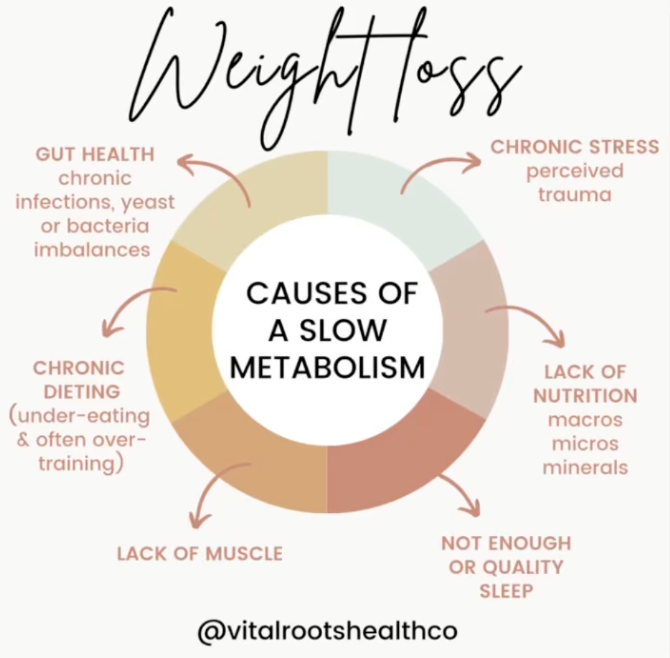
Your body has one goal: survival. Drastically cutting calories, according to your body, is anti-survival. Eventually, a very low-calorie diet triggers your body to slow your metabolism in order to conserve energy. It also triggers your body to find energy where it can: specifically for calorically expensive muscle mass. A loss, by the way, that further slows metabolism.
That same drastic cut in calories skyrockets the probability of nutrient deficiencies. There simply aren't enough calories to get all of the vitamins and minerals needed to function well. As a result: low energy, more cravings and disrupted hormones.
And those are just the biological consequences!
Very low-calorie diets can create an unhealthy relationship with food. (Take it from someone who's lived it). To cut and keep calories low, rules like "no sugar ever" and "skip breakfast to save calories" can easily sneak in and create a tricky grey area of disordered eating behaviors.
These are unsustainable because they fight how humans actually behave. And they're definitely not recommended because they often come layered with feelings of guilt and the need to be perfect.
When the choice is "be perfect" or feel like a failure...failure wins every time.
Anti-Diet Culture 1.0 Was Right…But Incomplete
Anti-diet culture 1.0 gave us some important truths:
Diets can be harmful
Food shame is toxic
Restriction can fuel bingeing
Your worth is more than your weight
But taken to the extreme, the message often became:
“Just eat intuitively. Don’t think about calories. Don’t track anything.”
For some people, that works beautifully.
For most people - people who live in a world where processed foods are cheap, easy to find and always available - it doesn’t.
If you’ve spent years dieting, restricting, and overeating, your hunger and fullness cues can get distorted.
“Intuition” might say:
“I’m starving”. But actually, you’re dehydrated.
“I deserve this”. But actually, you're having a bad day.
“One more snack”. But actually, your emotions are talking, not your body.
Anti-Diet Culture 2.0, on the other hand, is creating a solid structure of knowledge and connection to your body so that you are empowered to flex with real life.
That’s where balanced - not extreme - eating comes in.
Balanced, Not Extreme: What It Actually Means
This new approach lives in the middle:
Not:
Crash dieting
Endless “clean eating only”
Aggressive fasting
Obsessive macro tracking
But also not:
“Food doesn’t matter”
“Eat whatever, whenever”
“Ignore calories completely”
Instead, it’s:
Moderate structure + food freedom.
The core ideas:
Gentle tracking: light awareness of calories, protein, and rough macros
80/20 or 90/10 rule: mostly nutrient-dense foods, some flexibility
Progress defined by energy, mood, and labs, not just the scale
Let’s break that down.

What Is “Gentle Tracking” (And Why It Works)
Traditional tracking looks like:
Logging every gram in MyFitnessPal
Freaking out if you go over your macros
Turning food into a math exam
Gentle tracking is different. It’s simple awareness: a mindful and flexible approach to monitoring food intake - not micro-control.
Unlike rigid calorie or macro counting, gentle tracking involves paying attention to your eating patterns and how different foods make you feel, without strict rules, guilt, or obsession.
You pay attention to:
What you can add, instead of restrict. Instead of cutting out "bad" foods, the focus is on adding nutritious foods (e.g., fiber, protein, healthy fats) to meals to enhance balance, nutrient density and overall satisfaction.
Internal Cues over External Rules. Modern culture relies heavily on "normal" times to eat - like lunch break at work, and outdated rules like the clean plate club. Gentle tracking emphasizes listening to your body's natural hunger, fullness, and satisfaction signals, rather than relying on external metrics like a food scale, calorie counts, or eating rules
Mindful Awareness: Put your phone away. Don't answer email. Put your food on a plate, sit your butt in a chair and pay attention. This encourages being present while eating, noticing the flavors, textures, and aromas of food, and reflecting on how they affect your energy, mood, and digestion.
Daily protein target. Gentle tracking views getting enough protein as a key component of balanced eating, focusing on including a protein source in each meal and snack to promote satiety, muscle maintenance, and overall health, rather than obsessively counting every gram.
Rough balance of carbs, fats, protein over the day. The goal is to include a mix of all macronutrients at most meals and snacks because they offer different benefits (carbs for energy, protein for building tissue, and fats for nutrient absorption and hormones). However, this is not about meticulous tracking or aiming for a "perfect" ratio in every single meal; it is about the overall pattern of eating over time.
You’re not trying to be perfect. You’re aiming for “treated myself well.”
The 80/20 (or 90/10) Rule = Structure + Freedom
This is where food freedom lives.
80–90% of your food choices:
Lean proteins
Fruits & vegetables
Whole grains & starchy carbs (rice, potatoes, oats, quinoa, etc.)
Healthy fats (olive oil, avocado, nuts, seeds)
Minimally processed, nutrient-dense foods
10–20% of your food choices:
Dessert
Pizza
Wine/cocktails
Chocolate
Chips, snacks you genuinely love
No “cheat days.” No food is off-limits. You simply budget for pure health, and budget for joy.
How this looks in real life

Let’s say you eat 21 meals per week:
80/20 = 17 “nutrient-dense” meals, 4 flexible
90/10 = 19 “nutrient-dense” meals, 2 flexible
You can still lose fat, improve health, and feel amazing with this, because your average week is aligned with your goals, your mind doesn’t feel restricted and you stop bouncing between perfect and out-of-control.
The result: long-term, sustainable results.
Aka: lifestyle fitness.
How to Actually Eat Like This: A Simple Day
Here’s a sample day for Balanced, Not Extreme Eating (fat loss focus).
Breakfast
2 whole eggs + 2 egg whites
1 slice whole grain toast with avocado
1 piece of fruit (banana or berries)
Approx: 25–30 g protein
Lunch
Grilled chicken breast
1–1.5 cups cooked rice or quinoa
Big salad or roasted veggies
Olive oil & vinegar dressing
Approx: 35–40 g protein
Snack
Greek yogurt (or skyr)
Handful of berries or 1 tbsp honey
Approx: 15–20 g protein
Dinner
Salmon or tofu
Roasted potatoes
Mixed veggies with olive oil
Approx: 30–35 g protein
Flexible treat (the 10–20%)
Small dessert: 1–2 squares dark chocolate, or a scoop of ice cream
Or a glass of wine with dinner
You’re still on track and not feeling like a robot.

Stop Obsessing Over The Scale: What To Track Instead
The old diet mindset says that if the number on the scale isn’t dropping quickly, it's not working. But relying only on the scale is like judging an entire movie from a single still frame. It captures just one brief moment from a very limited angle and ignores everything else that’s changing—your body composition, your energy, your strength, your sleep, your mood, and your overall health.
This new mindset - this balanced, Anti Diet 2.0 model recognizes that and shifts to more important markers of progress and health:
Energy: Do you crash at 3 PM, or feel steady throughout the evening?
Mood: Less anxious, less irritable, more focused, more motivated?
Sleep: Falling asleep faster, waking up rested?
Hunger: Wild swings → smoother, more predictable?
Workouts: Getting stronger? Better endurance?
Digestion: Less bloating, discomfort, or irregularity?
Lab markers (with your doctor):
Fasting glucose & A1C
Triglycerides & HDL
Blood pressure
Inflammation markers, etc.
If:
Your clothes fit better
Your energy is stable
Your labs are improving
…you are doing really well, even if the scale is slow to catch up.
How To Get Started This Week (Without Overhauling Your Life)
Don’t try to fix everything on Day 1.
Use this 4-step launch plan instead:
Day 1–2: Awareness Only
Write down everything you eat and drink (no judgment, only honesty).
Notice: where are the hidden "empty" calories (oils, chemicals, mindless handfuls of snacks)?
Notice: are you missing protein?
Notice: did you eat when hungry, stop when full?
Day 3–4: Add Protein & Structure
Add 20–30 g of protein to breakfast and lunch.
Aim for 3–4 eating occasions per day (not constant grazing).
Drink mostly water, coffee, tea (limit sugary drinks and alcohol).
Day 5–7: Gentle Tracking
Use an app or notes to estimate your calories and protein.
Find your rough daily calorie range and protein target.
Don’t chase perfection; aim for 70–80% consistency.
Week 2+: Implement 80/20 or 90/10
Plan your flexible foods:
Date night
Drinks with friends
Dessert on the weekend
The rest of the time, keep meals simple, high-protein, mostly whole foods.
Sustainability trumps speed. Consistency beats intensity. Habits work better than willpower.
Common Diet Questions & Answers
“Can I still lose weight with this? It sounds too relaxed.”
Yes, you can absolutely lose weight with this gentler, balanced approach. Here's why:
For most people, the Anti Diet 2.0 structure, with its focus on whole foods, protein and hunger cues, actually creates a moderate calorie deficit even though you'll probably be eating more food.
The emphasis on simplicity and consistency tends to negate the swing between "restrictive weekdays" and "no-inhibitions weekends" creating an overall balance of calories that favors fat loss.
Most people do better when allowed 10–20% flexibility than when trying to be 100% “perfect.”
“Do I have to track forever?”
No. Think of gentle tracking as training wheels:
You use it to learn portions, protein, and balance >
Over time, you’ll be able to eyeball everything with ease >
You can fade out tracking once your habits are solid.
This is a strategy that I frequently use with clients who seek a lifestyle fit kind of routine.
“What if I have a history of disordered eating?”
Then you should not do this alone.
Talk to a registered dietitian or therapist specializing in eating disorders
Use this approach only under professional guidance
Mental health > any nutrition strategy
As someone who has a history of disordered eating, I can vouch for the power of finding inner peace before turning your attention to these numbers - even with this gentle approach.
In Conclusion: Embracing a Balanced Approach to Health and Wellness
The anti-diet movement is not just a fleeting trend; it is a paradigm shift that challenges the very foundations of traditional dieting. It encourages us to listen to our bodies, to eat mindfully, and to nourish ourselves without the guilt and pressure that often accompany conventional diets.
Free from the restrictive rules and complexity that characterizes many diet plans, gentle dieting is about making informed, healthful choices that align with your body's needs and your personal goals, all while letting self-compassion lead the way.


